
How to Build a Simple Affiliate Funnel in Systeme.io (Step-by-Step)
🔑 Key Takeaways
An affiliate funnel helps turn anonymous traffic into email subscribers and potential customers.
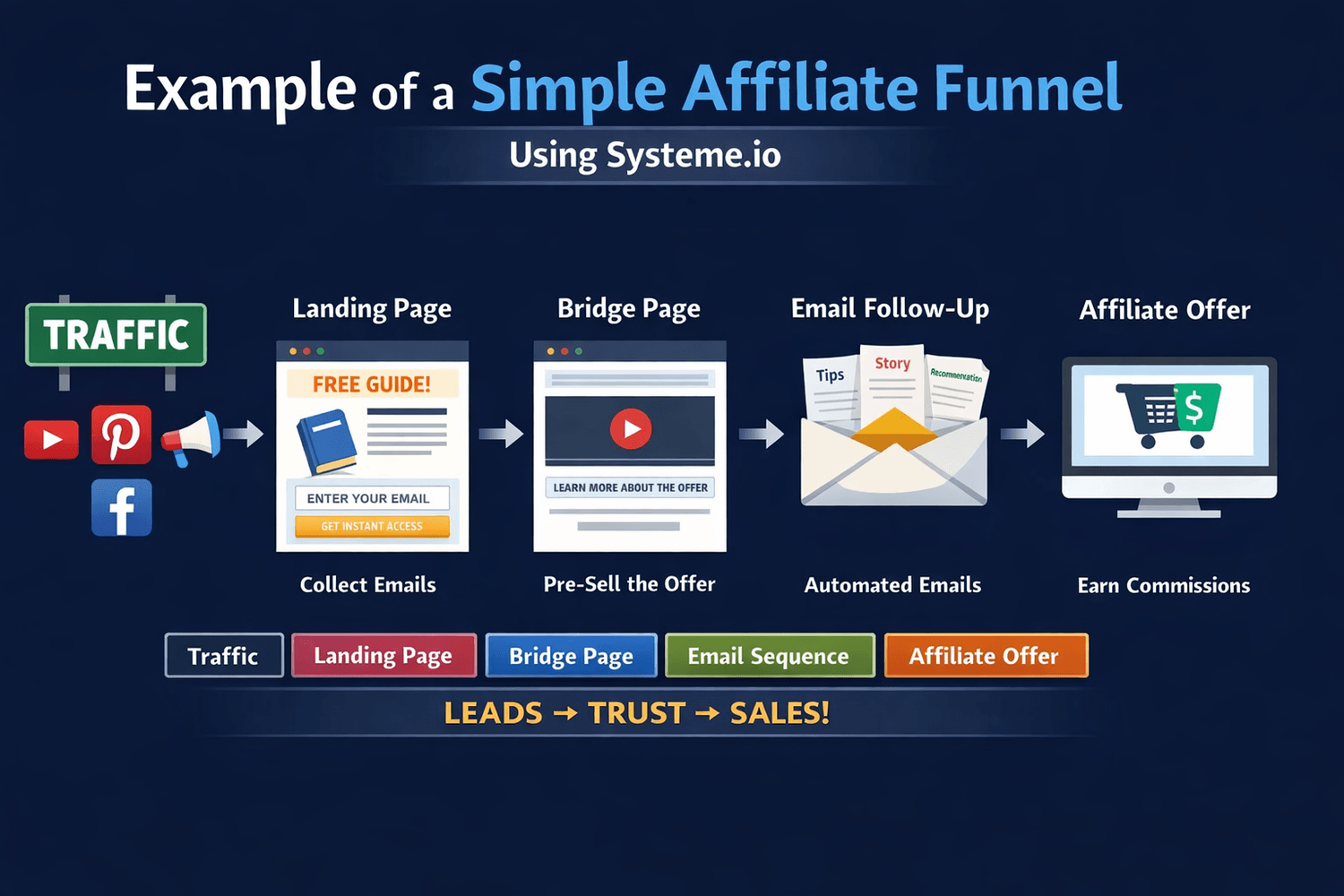
The core structure of a beginner funnel is simple: landing page, bridge page, email follow-up, and the affiliate offer.
A landing page should focus on collecting emails by offering a helpful resource or insight.
Bridge pages help build trust and explain why a recommendation matters before visitors reach the offer.
Email automation allows you to build relationships and follow up with subscribers over time.
Traffic can come from multiple sources such as blogging, Pinterest, YouTube, Facebook, or paid ads.
Consistency with one or two traffic sources is usually more effective than trying every platform at once.
Systeme.io allows beginners to build and manage the entire funnel structure in one place.
How to Build a Simple Affiliate Funnel in Systeme.io
One of the biggest mistakes beginners make in affiliate marketing is sending traffic directly to an affiliate link.
At first, this seems logical.
Someone clicks the link, sees the offer, and hopefully buys. But most of the time, that visitor leaves and never returns. The reason is simple. Most people need context before making a decision.
They want to understand:
What problem the product solves
Why someone recommends it
Whether it is relevant for them
That is why affiliate marketers use funnels. A funnel creates a simple journey that introduces the problem, builds trust, and then presents the solution.
Platforms like Systeme.io make this process much easier because everything needed to build the funnel exists in one place.
Step 1: Create a Landing Page
The landing page is where visitors arrive first. Its only purpose is to capture an email address.
Instead of promoting a product immediately, the page offers a useful resource that helps the visitor solve a small problem or understand something important about the topic they are researching.
This is a critical difference between beginners and experienced affiliate marketers. Beginners often try to sell immediately, while experienced marketers focus on building trust first.
A landing page allows you to begin that trust-building process.
Typical resources offered on landing pages include:
A beginner roadmap
A short training
A checklist
A guide explaining a common problem
A quick strategy breakdown
The goal is not to overwhelm the visitor with information. The goal is to give them something valuable enough that they are comfortable sharing their email address.
Inside Systeme.io you can build this page using the drag-and-drop funnel builder. The platform includes ready-made templates that make the process even faster, especially for beginners who have never built a landing page before.
A simple landing page usually includes four important elements.
1. A Clear Headline
The headline should speak directly to a problem the visitor is trying to solve.
For example:
"A Simple Affiliate Marketing Roadmap for Beginners"
"How to Start Building an Affiliate Income System"
Clear headlines perform much better than clever or vague ones.
2. A Short Explanation
Below the headline, a few sentences should explain what the visitor will learn or receive. This section builds curiosity and explains why the resource is valuable.
You do not need long paragraphs here. Two or three clear sentences are usually enough
3. A Simple Opt-In Form
The opt-in form collects the visitor's email address. Many successful landing pages only ask for an email address rather than multiple pieces of information.
The simpler the form, the higher the conversion rate tends to be.
4. A Clear Call to Action
The button should clearly tell the visitor what happens next.
For example:
Get the Guide
Access the Training
Send Me the Roadmap
Clarity always performs better than vague calls to action.
Once the visitor submits their email, they move to the next step of the funnel. At this point they become part of your email list, which allows you to follow up with helpful content and recommendations over time.
This is one of the most important moments in the entire funnel, because the visitor has now moved from anonymous traffic to a contact you can build a relationship with.
Over time, your email list becomes one of the most valuable assets in your affiliate marketing business.
Step 2: Redirect Visitors to a Bridge Page
After someone subscribes, they are redirected to another page. This page explains the opportunity or tool you recommend.
Many beginners skip this step and send people directly to the affiliate offer. While this might seem faster, it removes an important moment where you can add context and build trust.
A bridge page sits between the opt-in page and the affiliate offer. Its purpose is to prepare the visitor for what they are about to see and explain why the recommendation matters.
Think of it as a short conversation with your visitor before introducing them to the product.
A bridge page gives you a moment to explain:
Why you recommend the product
What problem it solves
Who it is best for
What results someone might expect
This extra context can increase conversions significantly.
Why Bridge Pages Work So Well for Affiliate Marketers
Affiliate offers often come from companies that the visitor has never heard of before. When someone clicks directly from a random link to a sales page, they may feel skeptical or confused.
A bridge page helps solve this problem by introducing the offer in your own voice.
Instead of the visitor landing on a sales page immediately, they first see your explanation. This small step builds familiarity and makes the transition feel natural.
Bridge pages also allow you to highlight the most relevant benefits of the offer before the visitor sees the full sales page.
For example, you might explain:
Why the tool simplifies a complicated process
How beginners can start without technical skills
What makes the platform different from other tools
By the time the visitor clicks through to the offer, they already understand why it might be useful.
Additional Benefits of Using Bridge Pages
Bridge pages offer several strategic advantages for affiliate marketers.
1. Trust Building
People are more likely to explore a product if it is recommended by someone they trust. A bridge page allows you to share your experience, your reasoning, or your perspective before introducing the product.
This creates a relationship-driven recommendation rather than a random promotion.
2. Positioning the Offer Clearly
Many affiliate products try to appeal to a wide audience. A bridge page allows you to narrow the focus and explain exactly who the offer is for.
For example, you might say the tool is ideal for:
Beginner affiliate marketers
Side hustlers with limited time
People who want a simple marketing system
This clarity helps the right people move forward while filtering out those who are not interested.
3. Increasing Conversion Rates
When visitors understand the context behind a recommendation, they are more likely to explore the offer seriously. Even a short bridge page explaining why the tool matters can significantly improve click-through rates and conversions.
4. Sharing Personal Insights
Bridge pages also give you space to share personal experiences.
For example, you might explain:
How you discovered the platform
Why you decided to use it
What problem it helped you solve
These insights make the recommendation feel authentic rather than promotional.
5. Pre-Framing the Offer
Pre-framing is a powerful marketing concept. It means preparing someone mentally for what they are about to see.
If you explain that a tool is designed to simplify affiliate marketing for beginners, the visitor will view the sales page through that lens.
This helps them understand the offer more quickly and increases the chances that they will see its value.
Simple Bridge Page Structure
A basic bridge page does not need to be complicated. In fact, the most effective ones are often very simple.
A typical bridge page might include:
A headline introducing the opportunity
A short explanation of why the tool or program matters
A few bullet points highlighting key benefits
A call-to-action button leading to the affiliate offer
Some affiliate marketers also include a short video where they explain the opportunity personally. Video bridge pages can be very effective because visitors get to hear directly from the person recommending the product.
The goal is not to sell aggressively. The goal is to guide the visitor toward the next step with clarity and confidence.
When used correctly, bridge pages create a smoother transition between curiosity and decision-making, which is why they are such a valuable part of many successful affiliate funnels.
The headline should speak directly to a problem the visitor is trying to solve.
For example:
"A Simple Affiliate Marketing Roadmap for Beginners"
"How to Start Building an Affiliate Income System"
Clear headlines perform much better than clever or vague ones.
Step 3: Set Up Email Automation
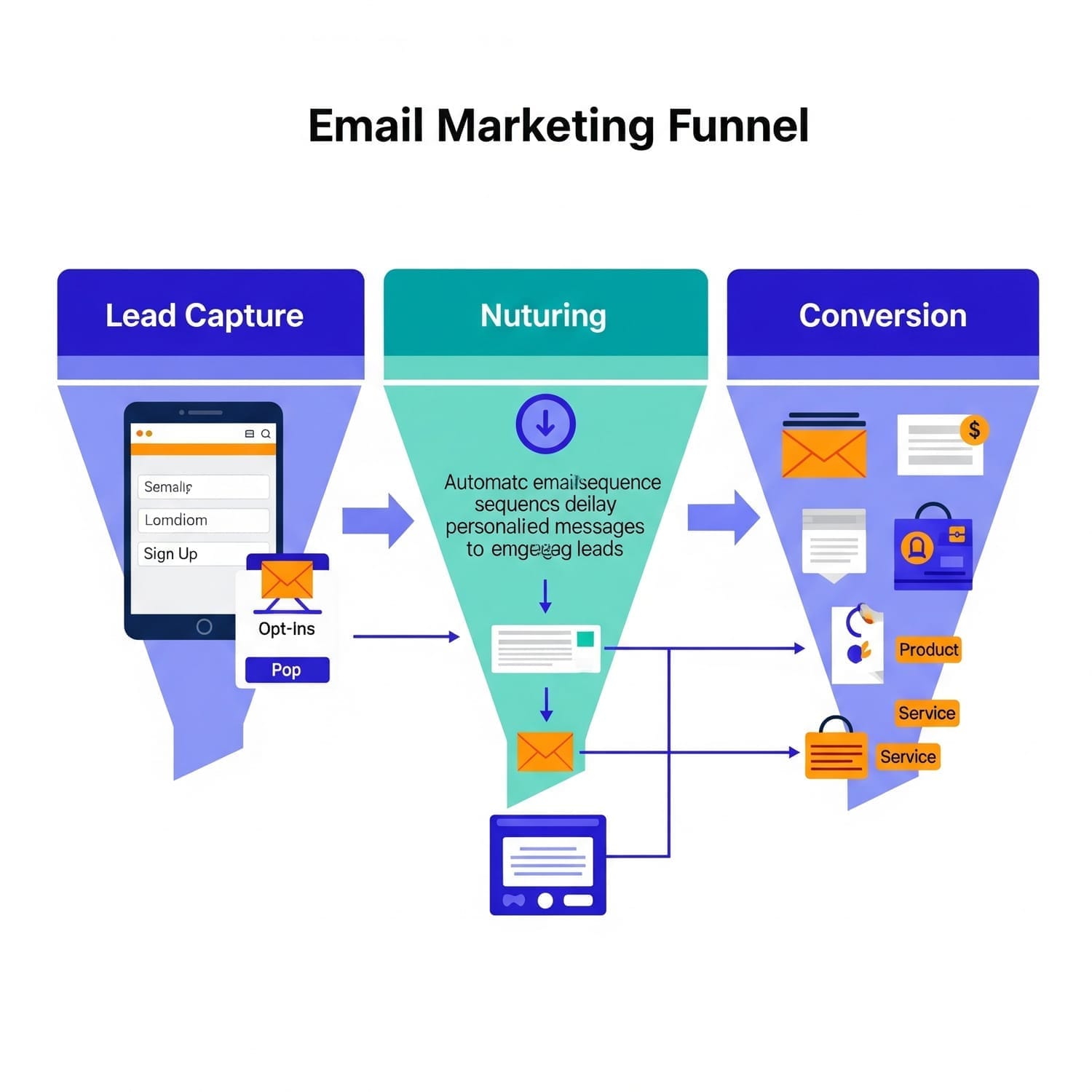
One of the most powerful parts of Systeme.io is the ability to automate follow-up emails.
When someone joins your list, they automatically start receiving emails.
A simple sequence might look like this:
1. Welcome email delivering the resource
2. Personal story or lesson learned
3. A common mistake beginners make
5. Educational email explaining a key concept
6. Introduction of the recommended solution
7. Case study or example
Reminder email. These emails help build trust and keep the conversation going even if the visitor does not take action immediately.
Step 4: Send Traffic to the Funnel
Once the funnel is ready, the next step is traffic.
Even the best funnel cannot produce results if nobody sees it. Traffic is simply the process of bringing people into your funnel so they can discover your content, join your email list, and eventually explore the offer you recommend.
Affiliate marketers generate traffic in many different ways. The key is not trying to master everything at once. It is usually better to focus on one traffic source, learn how it works, and build consistency over time.
If you want a deeper explanation of how to structure your traffic strategy, you can also read this article where I explain a simple framework for affiliate marketers:
https://www.getpaidwithdav.com/affiliate-marketing/traffic-plan-for-affiliate-marketing
That guide breaks down how beginners can think about traffic without becoming overwhelmed.
Below are several common traffic sources affiliate marketers use.
Blogging
Blogging allows you to create helpful articles that appear in search engines when people look for solutions to problems. Over time, these articles can send consistent visitors into your funnel.
Pinterest works well for evergreen topics like online business, marketing tools, and side hustles. You can create visual pins that link back to your blog posts or landing pages. If you want to learn how to use Pinterest for traffic, I have a free playlist on YouTube that walks through the strategy step by step.
YouTube
YouTube is powerful because people actively search for tutorials and product explanations. A simple video explaining a concept or reviewing a tool can direct viewers toward your funnel through the description or comments.
Facebook can be used to share insights, stories, and lessons learned while building your affiliate business. Posts that provide value often lead curious readers to explore the resources you recommend.
Paid Advertising
Some affiliate marketers choose to accelerate their traffic using paid ads. Platforms like YouTube Ads or Facebook Ads can send targeted visitors into a funnel quickly, allowing you to test messaging and offers.
Communities and Forums
Participating in communities where people ask questions about affiliate marketing or online business can also generate traffic. Providing thoughtful answers can naturally lead people to explore your resources.
Why Consistency Matters More Than Volume
Many beginners believe they need massive traffic to succeed. In reality, consistency is often more important than scale.
Publishing one helpful blog article each week, posting consistently on social platforms, or creating useful videos can gradually build momentum. Over time, these pieces of content begin to work together and send visitors into your funnel.
Even a simple funnel can produce results if traffic flows into it regularly.
Traffic is not about chasing every platform. It is about choosing one or two channels that fit your style and building a habit of showing up consistently.
Even a simple funnel can produce results if traffic flows into it regularly.
Why Simple Funnels Work Better
Many beginners think they need complex funnels with multiple pages and complicated automation.
In reality, simple funnels often convert better.
A basic structure is enough:
Traffic → Landing Page → Email Follow Up → Offer
This approach keeps things clear for both the marketer and the visitor.
Common Funnel Mistakes Beginners Make
Some mistakes appear repeatedly when people build their first funnel.
These include:
Sending traffic directly to affiliate links
Writing unclear headlines
Not collecting emails
Having no email follow-up
Trying to build overly complex funnels
At first glance, many beginners assume the problem is the funnel itself. They believe they need a different page design, a more complicated funnel structure, or a completely new system.
In reality, the issue is rarely the funnel.
More often, the challenge is understanding how to improve the funnel over time as you learn more about your audience.
A funnel is simply a structure that guides people through a journey. What makes it effective is how well it speaks to the right audience and how clearly it explains the problem and solution.
When beginners do not see results immediately, they often abandon the funnel and start building another one. This creates a cycle of constant rebuilding instead of learning.
A better approach is to treat the funnel as something you refine gradually.
For example, you might improve:
The headline on your landing page
The explanation of the problem
The lead magnet you offer
The email follow-up messages
The way you position the affiliate product
Small adjustments like these can significantly improve performance over time.
Another important factor is targeting the right audience. Even a well-built funnel will struggle if the traffic entering it is not interested in the topic or solution you are presenting.
As you begin to understand your audience better, you can adjust your messaging and content so the funnel speaks directly to their needs.
This is where using a platform like Systeme.io becomes very helpful.
Because everything is built inside one environment, it is easy to update pages, adjust email sequences, and test new ideas without needing to rebuild your entire system. You can modify headlines, edit funnel steps, and improve your messaging quickly.
Systeme.io also keeps the process affordable for beginners. Instead of paying for multiple tools just to experiment with small changes, you can manage your funnel, email automation, and pages from the same platform.
This flexibility encourages learning and improvement rather than constant rebuilding.
Over time, as you send more traffic and gather more feedback from your audience, your funnel naturally becomes stronger.
Keeping the structure simple while continuously improving how you communicate with your audience usually leads to far better results than constantly replacing the funnel itself.

Final Thoughts
Affiliate marketing funnels are not about complexity.
They are about guiding someone through a logical journey.
When visitors understand the problem and trust the recommendation, conversions become much more natural.
Tools like Systeme.io help simplify the process so beginners can focus on learning the skills that actually matter.
Traffic, communication, and consistency.
❓ Frequently Asked Questions
Do I need a funnel for affiliate marketing?
While it is possible to share direct links, funnels help capture leads and build relationships, which often leads to higher conversions.
How many pages should an affiliate funnel have?
Many successful funnels only use two or three pages: a landing page, a bridge page, and the affiliate offer.
Can beginners build funnels in Systeme.io?
Yes. The drag-and-drop builder allows beginners to create landing pages and automation without technical skills.
What is the most important part of a funnel?
Clear messaging and consistent follow-up are often more important than complex design.
How long does it take to build a funnel?
A basic funnel can usually be created within a few hours once you understand the structure.
What is a bridge page in affiliate marketing?
A bridge page is a page placed between your opt-in page and the affiliate offer. It allows you to explain why you recommend the product and helps prepare the visitor before they reach the sales page.
Why collect emails before promoting an affiliate offer?
Collecting emails allows you to follow up with visitors over time. Many people do not buy immediately, so email follow-up gives you multiple opportunities to build trust and present the offer again.
Can I run paid traffic to an affiliate funnel?
Yes. Many affiliate marketers send paid traffic to funnels because the email capture and follow-up process helps recover visitors who do not buy right away.
How much traffic do I need to see results?
You do not need massive traffic to start seeing results. Even a small but consistent flow of visitors can generate leads and sales when the funnel is structured properly.
Should beginners use one traffic source or many?
Most beginners benefit from focusing on one or two traffic sources first. This allows them to learn the platform and build consistency before expanding to additional channels.



Let's get social


Created with © systeme.io