
Conversion Skills for Affiliate Marketing: How to Turn Traffic Into Sales
🔑 Key Takeaways
Conversion skills in affiliate marketing help you turn traffic into leads, trust, and sales by giving visitors a clear next step after they find your content.
More traffic does not always mean more affiliate sales. If your messaging, landing page, email follow-up, or offer positioning is unclear, people may click but still not buy.
Copywriting plays a major role in affiliate marketing conversions because the right message helps people understand the problem, the solution, and why your recommendation matters.
A simple affiliate marketing conversion system usually follows this structure: content, landing page, email follow-up, bridge page, and offer.
Landing pages help improve affiliate conversions by capturing leads instead of sending visitors directly to an affiliate link.
Email follow-up builds trust over time and gives people more context before they decide whether an offer is right for them.
Bridge pages can improve affiliate marketing conversion rates by explaining why you recommend an offer before sending visitors to the sales page.
The goal of conversion is not to pressure people into buying. It is to guide the right audience with clear messaging, helpful content, and a relevant next step.
Beginners can improve affiliate conversions by testing headlines, landing page copy, email subject lines, calls to action, and offer positioning.
Traffic brings people in, but conversion skills give that traffic direction. This is why conversion is one of the most important affiliate marketing skills to learn.
Conversion Skills for Affiliate Marketing
Traffic is important. But traffic alone does not create sales. This is one of the biggest lessons beginners need to understand in affiliate marketing.
You can get views, clicks, followers, and visitors, but if your message is unclear, most people will not take the next step.
That is where conversion skills come in. Conversion skills are what help you turn attention into action. But conversion is not just about having a funnel, a landing page, or an affiliate link.
It is about using the right messaging at the right moment. This is where copywriting becomes so important. Your copy is the bridge between what your audience wants and the solution you are recommending.
If your audience feels confused, rushed, or disconnected from the message, they will leave.
But if your copy helps them feel understood, shows them the problem clearly, and explains the next step in simple language, conversion becomes much easier.
That action could be:
Joining your email list
Clicking through to a bridge page
Watching a video
Reading another article
Buying through your affiliate link
In affiliate marketing, conversion is not always about making the sale immediately. Often, the first conversion is simply getting someone to take the next step. This is why your message matters so much. A beginner might think the goal is to “sell harder.” But in reality, the goal is to communicate better.
Better messaging helps people understand:
Why the problem matters
What mistake they might be making
What solution could help
Why your recommendation is relevant
What they should do next
This is not about pressure. It is about clarity. For example, if someone lands on your page from a blog post about affiliate marketing traffic, they may not be ready to buy anything yet. They may simply be trying to understand why their content is not getting results. So your copy needs to meet them there.
Instead of saying, “Buy this tool now,” your message might explain... “You do not just need more traffic. You need a simple system that helps turn traffic into leads and trust.” That kind of message connects because it speaks to where the person is in their journey.
This is the real job of copy in affiliate marketing. It helps position the offer in a way that feels useful, relevant, and timely. Once you understand that, affiliate marketing becomes less confusing. You stop thinking only about getting more traffic.
You start thinking about how to guide the traffic you already have with better messaging, stronger follow-up, and a clearer next step. That is what conversion skills are really about. They help you take attention and turn it into trust. And trust is what makes sales possible.
What Are Conversion Skills in Affiliate Marketing?
Conversion skills are the skills that help you guide someone from interest to action. This is where affiliate marketing starts to become more real. Because in the beginning, most people focus on traffic. I understand why. Traffic feels like the main problem. If nobody sees your content, nobody can click your link, join your list, or buy through your recommendation.
So yes, traffic matters.
In fact, traffic is one of the main skills in affiliate marketing. But traffic by itself is not enough. I learned this the hard way over the years. You can get clicks. You can get visitors. You can even get people watching your videos or reading your posts. But if the message is not clear, if the next step is confusing, or if the offer is not positioned properly, most people will simply leave.
That is why conversion skills matter.
Conversion is what happens after someone finds you. They may come from a blog post, a YouTube video, a Pinterest pin, a Facebook post, or a paid ad. That first visit is traffic. But what happens next is where the real business starts.
Do they understand what you are saying?
Do they feel like your message speaks to their problem?
Do they know what step to take next?
Do they trust your recommendation?
This is where copywriting becomes one of the most important parts of conversion. Copy is not just “sales writing.” It is the way you communicate the right message to the right person at the right moment.
For example, if someone is struggling to get results in affiliate marketing, they may think they need more traffic. But the real problem might be that they do not have a clear system after the traffic arrives.
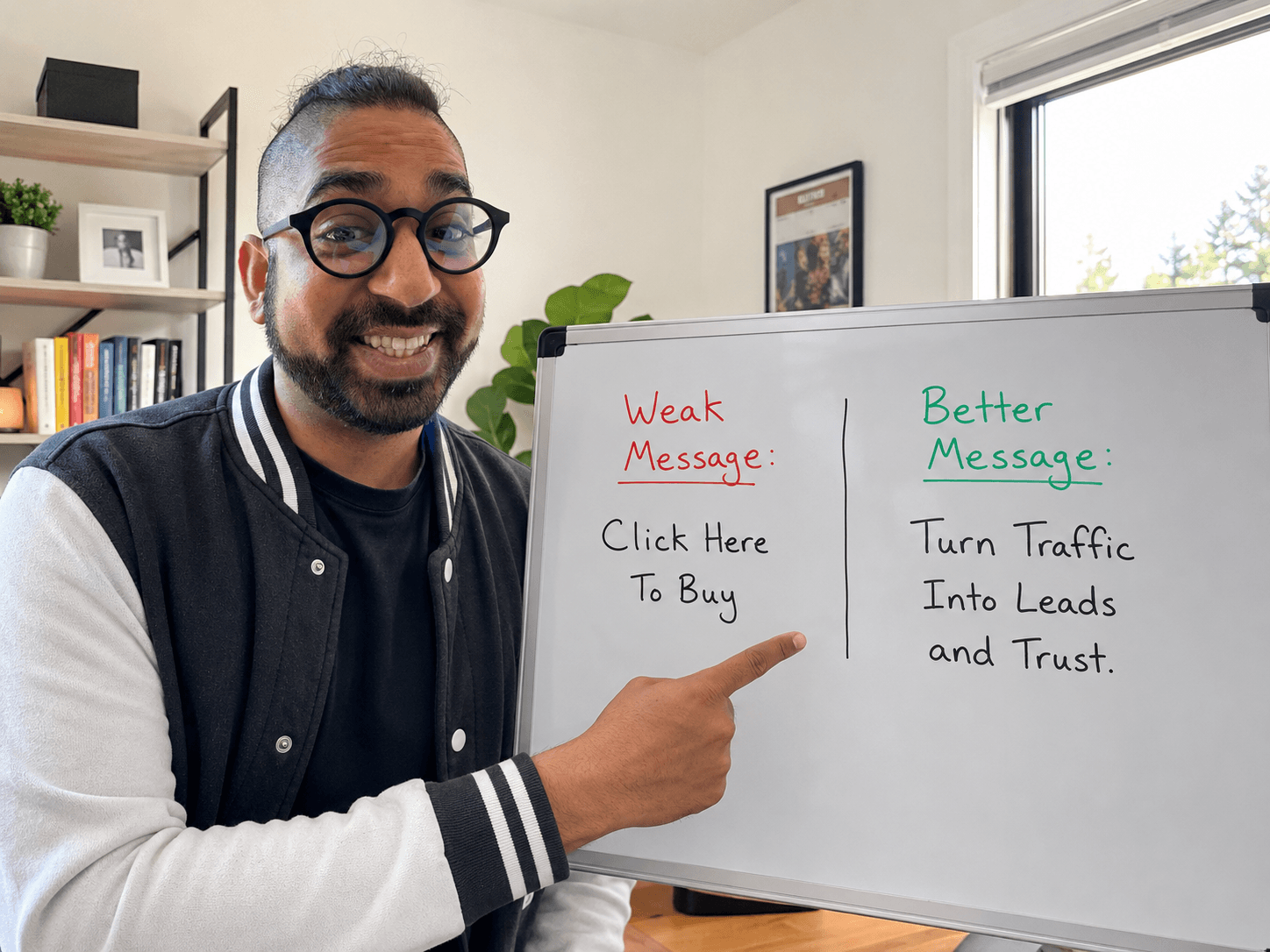
So instead of saying something generic like:
“Click here to make money online.”
A stronger message would be:
“You do not just need more traffic. You need a simple system that helps turn traffic into leads, trust, and sales.”
That message works better because it meets the person where they are. It speaks to the real problem. It creates clarity. That is conversion. It is not about forcing someone to buy.
It is about helping them understand why the next step makes sense.
Good conversion skills include clear messaging, landing pages, email follow-up, bridge pages, offer positioning, and calls to action.
But underneath all of that is one important idea:
Your message has to connect. If your copy is vague, people feel confused. If your copy is too aggressive, people pull back. But if your copy helps people feel understood, shows them the problem clearly, and explains the next step simply, conversions become much easier. That is why traffic and conversion have to work together. Traffic brings people in. Conversion guides them forward. And copywriting is what connects the two.
Why More Traffic Does Not Always Mean More Sales
Many beginners believe the answer to everything is more traffic. And I understand why.
Traffic feels like the main problem when you are starting out. If nobody sees your content, nobody can join your email list, click your link, or buy through your recommendation.
So yes, traffic matters.
It is one of the main skills in affiliate marketing. But here is the part many people miss. More traffic does not automatically mean more sales. You can send more people to a page, but if the message is unclear, they will still leave. You can get more clicks, but if the offer is not positioned properly, those clicks will not turn into results. You can get more views, but if people do not understand why your recommendation matters, the views will not mean much.
This is why conversion skills matter so much.
The real question is not only:
“How do I get more people to see this?”
The better question is:
“What happens when the right person sees this?”
That question changes everything.
Because once someone lands on your content, page, or funnel, your messaging has to do the work. Your copy needs to make the person feel understood. It needs to explain the problem clearly. It needs to show why the next step makes sense.
For example, a beginner might write something like:
“Click here to get this amazing affiliate marketing tool.”
That message is too general.
It does not explain why the tool matters. It does not connect to a specific problem. It does not give the reader a strong reason to care.
A better message would be:
“If you are getting traffic but not building leads, you may not need another traffic source. You may need a simple follow-up system that helps turn visitors into subscribers and trust.”
That message works better because it speaks to a real situation. It shows the reader that you understand the problem behind the problem. That is what good conversion copy does. It does not just promote the offer. It positions the offer. This is why a small amount of targeted traffic with a clear message can outperform a large amount of random traffic with weak messaging.
The issue is not always visibility. Sometimes the issue is clarity. If your landing page is vague, people leave. If your email follow-up does not build trust, people go cold. If your bridge page does not explain the recommendation, people feel disconnected from the offer. And if your call to action is unclear, people do nothing. That is why traffic and conversion have to work together.
Traffic brings people in. But copy gives them a reason to stay. Your funnel gives them a path to follow.
Your email follow-up gives them time to understand the value. And your offer positioning helps them see why the product or solution is relevant. So when people say they need more traffic, sometimes they are right. But many times, they also need better messaging.
Because more traffic sent into a weak system only exposes the weakness faster.
Better conversion skills help you make better use of the traffic you already have.
And once your message, funnel, and follow-up become clearer, every traffic source becomes more valuable.

The Simple Affiliate Marketing Conversion System
A simple affiliate marketing conversion system does not need to be complicated. In fact, the simpler it is, the easier it becomes to understand what is working and what needs to improve.
A lot of beginners think they need a huge funnel with multiple pages, complicated automations, and advanced tracking before they can get results. But most of the time, that creates more confusion than clarity. A beginner-friendly conversion system usually starts with one clear path.
Someone finds your content. They click because the message speaks to something they are already thinking about. They land on a page that gives them a reason to join your email list. Then your emails continue the conversation and help them understand why the offer you recommend could be useful.
That is the basic flow:
Content → Landing Page → Email Follow-Up → Offer
The content creates awareness. The landing page captures the lead. The email follow-up builds trust. The offer gives the person a clear next step. This works because you are not relying on one random click to do all the work. And that is important. When beginners send traffic directly to an affiliate link, they are usually asking the sales page to do everything. The visitor has to understand the problem, trust the recommendation, believe the product is relevant, and make a decision immediately.
That is a lot to expect from one click. A simple conversion system gives people more context.
Your content introduces the idea. Your landing page makes the next step simple. Your emails help the person think through the problem. Your offer becomes a natural recommendation instead of a random pitch.
This is also where copywriting becomes powerful. Every step in the system depends on the message. Your content needs a hook that attracts the right person. Your landing page needs a headline that explains the value clearly. Your emails need to feel helpful instead of pushy.
Your call to action needs to make the next step obvious. That is why conversion is not just about having a funnel. It is about having the right message inside the funnel. A basic funnel with clear messaging can outperform a complicated funnel with confusing copy.
For example, if your content is about struggling to get affiliate sales, your landing page should not suddenly talk about “financial freedom” in a vague way.
It should stay connected to the problem.
A clearer message would be something like:
“You do not just need more traffic. You need a simple follow-up system that helps turn visitors into leads and trust.”
That message continues the thought the person already has. And when your message stays connected from content to landing page to email to offer, the experience feels smoother. That is what a good conversion system does. It does not force people. It guides them.
It helps the right person move from attention to trust, and from trust to action.
Landing Pages and Lead Capture
A landing page is one of the simplest ways to improve conversions. Instead of sending people directly to an affiliate link, you send them to a page where they can join your email list.
This gives you a way to continue the conversation. A good landing page does not need to be complicated. You can find a free tool here in case you need to learn how to do it.
Just in case, I will even add a link to my tools page in case you are interested in other funnel builder tools you can use or just use what you already have.
It should clearly explain:
What problem you are helping with
What the visitor will receive
Why it matters
What action they should take next
For beginners, the goal is not to build the perfect page. The goal is to create a clear page that helps the right person take the next step. This is where messaging matters again. A weak landing page usually tries to say too much or uses vague promises.
A stronger landing page speaks directly to the problem the visitor already has.
For example, instead of saying:
“Learn affiliate marketing today.”
A clearer message could be:
“Learn the simple system that helps turn affiliate traffic into leads and trust.”
The second message is more specific. It shows the outcome. It explains the value. And it gives the visitor a clearer reason to pay attention. Over time, you can improve your headline, message, offer, and call to action.
Email Follow-Up and Trust Building
Email follow-up is one of the most important conversion skills in affiliate marketing. And it is also one of the areas beginners often ignore. Most people do not buy the first time they see an offer. That does not always mean they are not interested. Sometimes they need more time. Sometimes they need more context. Sometimes they need to understand why the recommendation is relevant to their situation.
This is why email matters. When someone joins your email list, they are giving you a chance to continue the conversation. That is powerful because you are no longer relying on one post, one video, one ad, or one click to do all the work. You now have a way to build trust over time. But here is where messaging matters again. Email follow-up is not just about sending promotions.
It is about guiding someone through a thought process. If someone joins your list after reading about affiliate marketing traffic, they may not be ready to buy a tool or program immediately. They may still be trying to understand why they are getting views but not results.
So your emails need to meet them where they are.
A weak email might say:
“Here is the best system to make money online. Click here now.”
That sounds generic. It does not connect to the problem they are actually facing.
A stronger email might say:
“You may not need more traffic right now. You may need a simple follow-up system that helps turn the traffic you already have into leads and trust.”
That message works better because it continues the conversation from where the person already is. This is what good email copy does. It does not push. It connects. It helps the reader feel understood, then gives them a clearer way to think about the problem.
A simple email follow-up sequence can help you:
deliver value
share your story or experience
explain the problem clearly
introduce the offer naturally
answer common objections
remind people to take action
But even those steps should feel like a natural conversation, not a hard pitch. The goal is to build trust. You can do that by sharing lessons, explaining mistakes, showing what you have learned, and helping people understand the next step without making exaggerated claims.
For example, instead of constantly saying, “Buy this now,” you can show them why the problem matters.
You can explain why traffic alone is not enough. You can show how a landing page, email sequence, and offer work together. Then, when you introduce a product or tool, it feels like a logical next step instead of a random promotion. That is the real power of email follow-up. It gives people time to understand. It gives you time to explain. And it gives trust time to grow.
In affiliate marketing, that matters a lot. Because people rarely buy just because you shared a link.
They buy when the message makes sense, the timing feels right, and the recommendation feels relevant.
That is why email follow-up is not just a backend task. It is a conversion skill. And the better you get at writing emails that educate, guide, and build trust, the more valuable your traffic becomes.
Bridge Pages and Offer Positioning
A bridge page is a page that sits between your content or opt-in page and the affiliate offer. Its job is to explain the recommendation before the person lands on the sales page. This matters because many affiliate offers are created by someone else.
If you send people directly to the offer, they may not understand why you are recommending it.
A bridge page gives you space to explain:
Why the offer is relevant
Who it is for
What problem it solves
How it connects to what the person already wants
This helps pre-frame the offer and can improve conversions. The goal is not to hype the product.
The goal is to create clarity. Think of the bridge page as a short conversation before the recommendation.
You are helping the reader understand why this next step makes sense. Good bridge page copy should feel simple, honest, and direct. It should connect the visitor’s problem with the product’s solution without making exaggerated promises.
Copywriting and Conversion
Copywriting supports every part of conversion. It affects your headlines, landing pages, emails, bridge pages, calls to action, and offer positioning. But good copywriting is not about sounding clever.
It is about being clear.
The best copy helps people understand:
The problem they are facing
Why it matters
What solution could help
What step to take next
For affiliate marketers, copywriting is especially important because you are often recommending someone else’s product. Your job is to connect the audience’s problem with the product’s solution in a way that feels honest and helpful.
When your copy is clear, conversion becomes easier. A good way to think about copy is this:
Your copy should make the next step feel obvious. If someone reads your headline, email, or bridge page and still feels confused, the message needs work. Clear copy does not push people.
It guides them. That is the difference. Many people use AI like ChatGPT or Claude for this aspect but the experience you have, the voice you have and much more value more to improve the experience.
With affiliate marketing never look at yourself as the easy method to work with rather how you can help your customer in the best way. That is what relates to them and that is what can help convert more. We have to start changing this industry by creating new higher quality trends.
I learned how to do this with tools, training and information via the OLSP ACADEMY
Common Conversion Mistakes Beginners Make
Many beginners make the same conversion mistakes. They send traffic directly to affiliate links. They do not collect emails. They use unclear headlines. They do not explain why the offer matters.
They try to sell too quickly without building trust.
The problem is not always the product or the traffic source. Often, the problem is that the conversion path is unclear. If someone does not understand the next step, they will not take it. That is why conversion is about clarity, not pressure.
A simple, clear path will usually outperform a complicated funnel that confuses people. Another common mistake is copying generic marketing language. Beginners often write phrases that sound like every other online business page. But generic copy does not build trust. Specific messaging does.
Instead of saying:
“This system can change your life.”
It is usually better to say something more grounded, like:
“This helps beginners understand how to turn traffic into leads before promoting an offer.”
That kind of messaging is more believable. And believable messaging converts better.
How to Improve Affiliate Marketing Conversions Over Time
Conversions improve through small adjustments. You do not need to rebuild everything every time something does not work. Instead, improve one part at a time.
You can test:
Your headline
Your landing page message
Your lead magnet
Your email subject lines
Your call to action
Your bridge page explanation
Your offer positioning
This is where real learning happens. Every adjustment gives you feedback. Over time, you begin understanding your audience better. And when you understand your audience better, your conversions improve naturally.
The key is not to guess forever. The key is to observe. Look at what people click. Look at what they ignore. Look at which emails get replies. Look at which pages lose attention. Those clues tell you where the messaging needs to improve. Conversion is not a one-time setup. It is an ongoing skill.

Final Thoughts
Traffic matters. But conversion is what gives traffic direction. If you want to build affiliate marketing results that last, focus on creating a simple system that guides the right audience from attention to trust to action.
That does not require complicated funnels. It requires clear communication, helpful follow-up, and consistent improvement. The better you become at converting traffic into leads and trust, the more valuable every traffic source becomes.
That is why conversion is one of the most important affiliate marketing skills to learn. Because once you understand conversion, you stop chasing random clicks. You start building a process.
And that process becomes something you can improve over time.
❓ Frequently Asked Questions
What are conversion skills in affiliate marketing?
Conversion skills are the skills that help you turn traffic into leads, trust, and sales. They include landing pages, email follow-up, copywriting, offer positioning, and clear calls to action.
Why is conversion important in affiliate marketing?
Conversion is important because traffic alone does not create income. You need a system that guides people toward the next step.
What is a good affiliate marketing conversion system?
A simple system includes content, a landing page, email follow-up, and a relevant offer.
Do I need a funnel to improve affiliate conversions?
You do not need a complicated funnel, but you do need a clear process that gives visitors a next step.
How does email improve affiliate conversions?
Email allows you to follow up, build trust, explain the offer, and stay connected with people who do not buy immediately.
What is a bridge page in affiliate marketing?
A bridge page explains why you recommend an offer before sending someone to the sales page.
Why do people click but not buy?
People may click but not buy because the message is unclear, the offer is not explained well, trust is missing, or the audience is not ready yet.
How can beginners improve affiliate conversions?
Beginners can improve conversions by simplifying their message, collecting emails, improving follow-up, and making the next step clear.
How does copywriting improve affiliate conversions?
Copywriting improves conversions by helping people understand the problem, the solution, and the next step. Clear copy makes the decision feel easier.
What is offer positioning in affiliate marketing?
Offer positioning is how you explain the relevance of the product you recommend. It connects the audience’s problem with the solution the offer provides.
Is conversion only about making sales?
No. A conversion can be any meaningful next step, such as an email opt-in, a click, a video view, a reply, or a sale.
What is the biggest conversion mistake beginners make?
The biggest mistake is sending traffic to an offer without a clear message, follow-up system, or reason for the visitor to trust the recommendation.



Let's get social


Created with © systeme.io